Starting your morning with a consistent, simple ritual can make a meaningful difference to your health over weeks and months. For centuries, traditional Indian wellness practices have included raw honey as a morning staple — mixed into warm water, lemon water, or simply taken off the spoon.
Modern understanding of food science helps explain why this habit persists. Raw, unprocessed honey is chemically quite different from the pasteurised honey found in plastic squeeze bottles. Here are five well-established reasons to include it in your morning routine, along with practical guidance on how to do it right.
Important note: Honey should not be given to children under 12 months of age. The information in this article reflects general wellness habits and is not a substitute for medical advice.
1. Natural Antioxidant and Enzyme Intake
Raw honey contains a range of naturally occurring antioxidants — including flavonoids and phenolic acids — that are formed in nectar during the bees' enzymatic conversion process. These compounds are most concentrated and active in honey that has not been subjected to high heat.
When bees process nectar into honey, they add enzymes like glucose oxidase and diastase. Glucose oxidase produces small amounts of hydrogen peroxide, which contributes to honey's natural antimicrobial properties. Diastase helps break down starches.
Heating honey above approximately 40°C begins to degrade these enzymes. This is why raw honey from a reputable beekeeper will show high diastase activity scores on FSSAI testing, while overprocessed commercial honey often barely meets the minimum threshold.
Eating a teaspoon of raw honey in the morning gives you these enzymes in their active form — something you simply cannot get from pasteurised honey.
2. Gut-Friendly Prebiotic Properties
Raw honey contains small amounts of oligosaccharides — complex carbohydrates that the human body cannot fully digest but that beneficial gut bacteria (lactobacilli and bifidobacteria) can metabolise. This qualifies raw honey as a mild prebiotic food.
Consuming it consistently, particularly on an empty stomach in warm water, creates a favourable environment in the digestive tract before the main meal of the day. This is especially relevant if you experience morning bloating or slow digestion.
The traditional Indian practice of taking honey with lukewarm water first thing in the morning — referenced in Ayurvedic texts — aligns with this mechanism: warm water aids gastric motility, and the honey provides a gentle prebiotic boost to the gut microbiome.
Practical tip: Use warm water, not boiling. Water above 60°C will degrade the enzymes and much of the nutritional value. Comfortable to touch is the right temperature.
3. Steady Energy Without a Sharp Spike
Raw honey provides energy through a combination of fructose and glucose in roughly a 1:1 ratio, along with small amounts of more complex sugars. This natural blend is absorbed at a moderate rate compared to refined white sugar, which is pure sucrose and breaks down almost immediately into glucose.
This means raw honey is less likely to cause the sharp rise-and-fall in blood sugar that makes you feel alert for thirty minutes and then tired an hour later.
For people who exercise in the morning, a teaspoon of raw honey before a workout provides accessible fuel without the digestive heaviness of a solid meal. For people who prefer not to eat before morning exercise, honey in warm water is a commonly used light pre-workout option.
This is not a substitute for a balanced diet, but as an energy source it is nutritionally richer than plain sugar or many commercially sweetened drinks.
4. Traditional Use for Throat and Respiratory Comfort
Raw honey has a long history of use across Indian traditional medicine for soothing sore throats, dry coughs, and mild respiratory irritation. This is backed by a reasonable body of modern research showing that honey's viscosity, mild antimicrobial properties, and low pH create a coating effect on throat tissue.
The World Health Organisation acknowledges honey as a potential demulcent (a substance that soothes mucous membranes) for cough symptoms in its guidelines on the management of childhood illnesses — though the recommendation is for children over 12 months.
Specifically, Tulsi honey (harvested from Holy Basil fields) and Wild Forest honey are traditionally associated with respiratory support in Indian beekeeping communities, owing to their strong aromatic profiles and high phenolic content.
If you are prone to seasonal colds or throat irritation, a morning teaspoon of raw honey in warm water or warm herbal tea is a gentle and evidence-consistent daily habit.
5. A Nutritionally Richer Alternative to Refined Sugar
Refined white sugar is chemically pure sucrose — it provides calories and nothing else. Raw honey, by contrast, contains trace amounts of:
- B vitamins (riboflavin, niacin, pantothenic acid, B6)
- Minerals (potassium, calcium, magnesium, phosphorus, zinc)
- Amino acids from bee pollen
- Organic acids (gluconic acid, citric acid) that contribute to honey's flavour and low pH
These are present in small quantities per teaspoon, so honey is not a primary source of vitamins or minerals. But for people who are already consuming sugar daily, substituting raw honey means you are at minimum getting the same energy with the added benefit of enzyme activity and micronutrient traces — not instead of a balanced diet, but as a smarter default sweetener within one.
How to Correctly Consume Raw Honey in the Morning
The basic method (most common): Add one teaspoon of raw honey to a glass of lukewarm water. Stir well and drink on an empty stomach before breakfast. Some people add half a lemon for additional Vitamin C.
Things to avoid:
- Do not add honey to boiling water or hot tea. Temperatures above 60°C begin to degrade active enzymes. Wait for your tea or water to cool to a comfortable temperature first.
- Do not use a metal spoon if you are storing honey — metal ions can interact with the hydrogen peroxide produced by glucose oxidase over time. For daily use this effect is negligible, but for long-term storage, use a dry wooden or ceramic spoon.
- Do not give honey to infants under 12 months. This is a firm safety guideline with no exceptions.
Quantity: One teaspoon (approximately 7–10 grams) in the morning is a sufficient and sustainable habit. More is not necessarily better — honey is still predominantly sugar, and portion size matters.
Which Honey Works Best for a Morning Ritual?
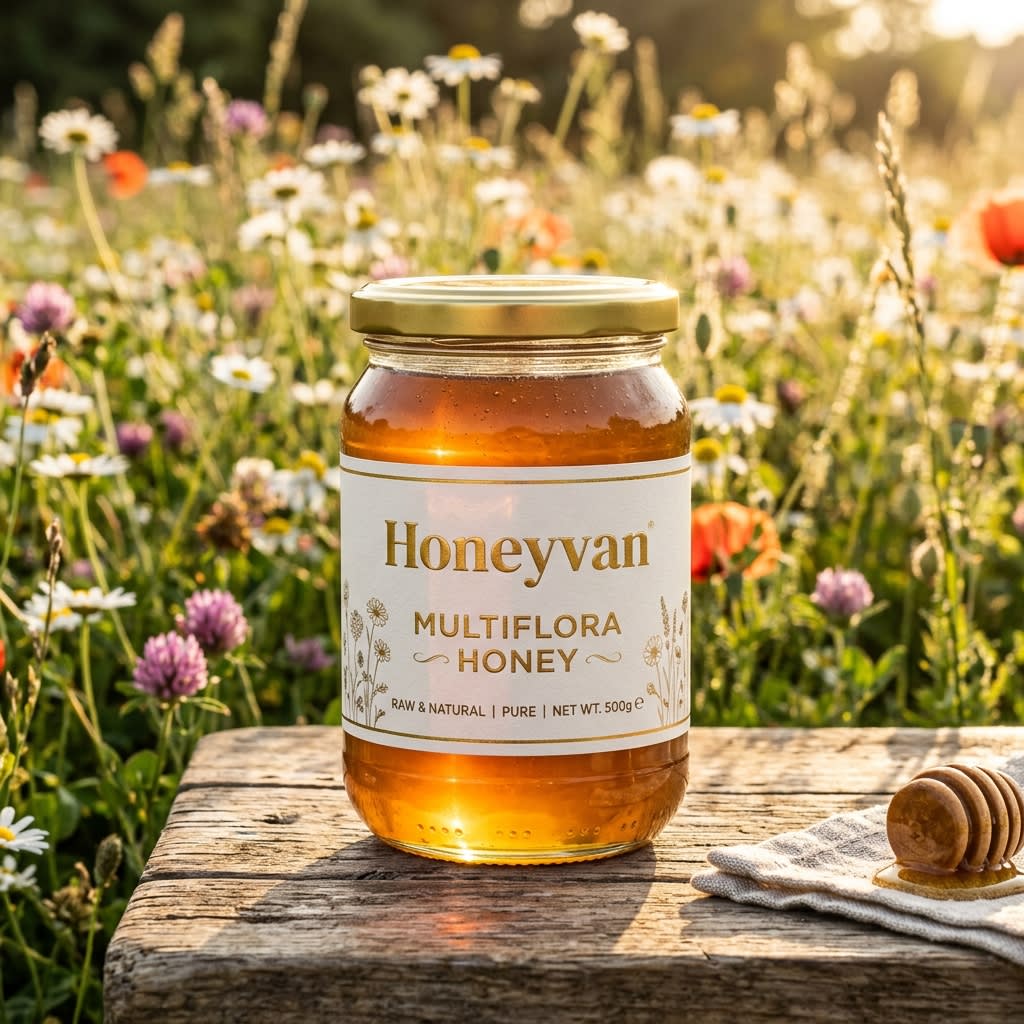
For everyday morning use, a mild and balanced variety like Raw Multiflora Honey or Raw Wild Forest Honey works well. These have a pleasant, clean sweetness without the strong herbal notes of varieties like Ajwain or Jamun, which are better suited as flavour additions in cooking or specific wellness routines.
Browse our Raw Honey Collection to find the variety that suits your taste and wellness goals. All Honeyvan honeys are cold-extracted and unfiltered — which means you are always getting the full, active, unprocessed product.