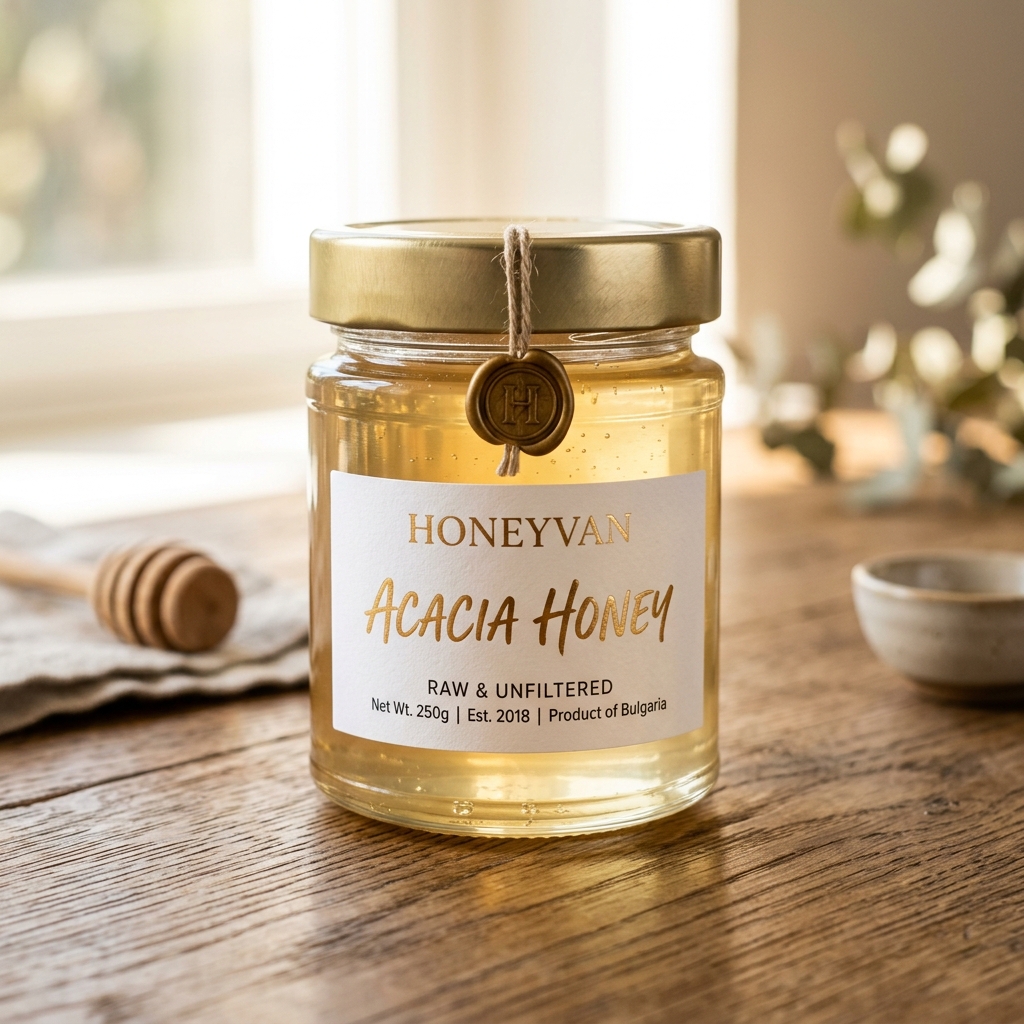
Bees are the quiet caretakers of our planet. They pollinate one-third of the food we eat and are single-handedly responsible for maintaining the balance of our natural ecosystems.
Yet, in the race for mass-market commercial production, bees are often treated as simple assembly-line machines. They are subjected to harsh synthetic chemical treatments, fed sugar syrup instead of their own honey, and exposed to industrial processes that deplete their health.
At Honeyvan, we believe there is a better, kinder way. Our journey began with a simple promise: To respect the bees, nurture our farms, and deliver honey exactly the way nature intended.
Here is what sustainable and ethical bee farming looks like at Honeyvan.
🍯 1. Bees Eat Honey, Not Sugar Syrup
In large-scale commercial bee farms, beekeepers extract every single drop of honey from the hive to maximize profits. To keep the bees from starving, they feed the colony cheap, artificial high-fructose corn syrup or white sugar water. This weakens the bees' immune systems and contaminates the purity of the next honey cycle.
At Honeyvan, we always leave ample honey reserves inside the hive for our bees. We only harvest the surplus honey that the colony doesn't need for its own survival and wintering. This ensures our bees stay strong, happy, and naturally healthy!
🚫 2. Zero Cruelty Cold Extraction
Many industrial honey packers use heat and high-speed centrifuges that can crush or kill bees and ruin the delicate structure of the hive.
Our extraction process is slow, gentle, and completely cold-processed:
- We use non-lethal, gentle smoke to calm the bees before inspecting the combs.
- We hand-sweep bees away carefully using soft brushes, ensuring not a single bee is harmed.
- We extract the honey by uncapping the wax cells manually and using a gentle hand-cranked spinner, keeping the structural beeswax comb completely intact so the bees can reuse it.
🌿 3. Migratory Beekeeping: Following the Flowers
We do not lock our bees in a single location and feed them artificial flavorings. Instead, we practice migratory beekeeping, following the natural seasonal blossoms of India.
When the Jamun trees bloom in winter, our hives travel to organic Jamun orchards. When spring arrives, we move our apiaries to Carom (Ajwain) fields or wild wildflower meadows. This migratory cycle:
- Provides our bees with a diverse, rich, and highly nutritional natural diet.
- Promotes organic cross-pollination, helping local farmers increase their crop yields by 20% to 30%.
- Yields 100% genuine, single-origin unifloral honey without any added flavors or artificial syrups.
💚 How You Support the Ecosystem
When you purchase a jar of Honeyvan honey, you aren't just buying premium raw honey. You are directly supporting:
- Livelihoods of local beekeepers who practice ethical farming.
- The survival of bee colonies in India against chemical pesticide exposure.
- Biodiversity and sustainable agriculture in the organic farming belts.