Adulteration is one of the biggest problems in the global honey industry today. Most supermarket brands sell "honey" that is heavily diluted with cheap sugar syrups, high-fructose corn syrup (HFCS), and rice syrup. These fakes look clear and stay liquid forever, but they lack all of the health benefits of genuine raw honey.
If you want to know if the jar in your kitchen is real or fake, here are 5 simple tests you can perform at home to verify its purity.
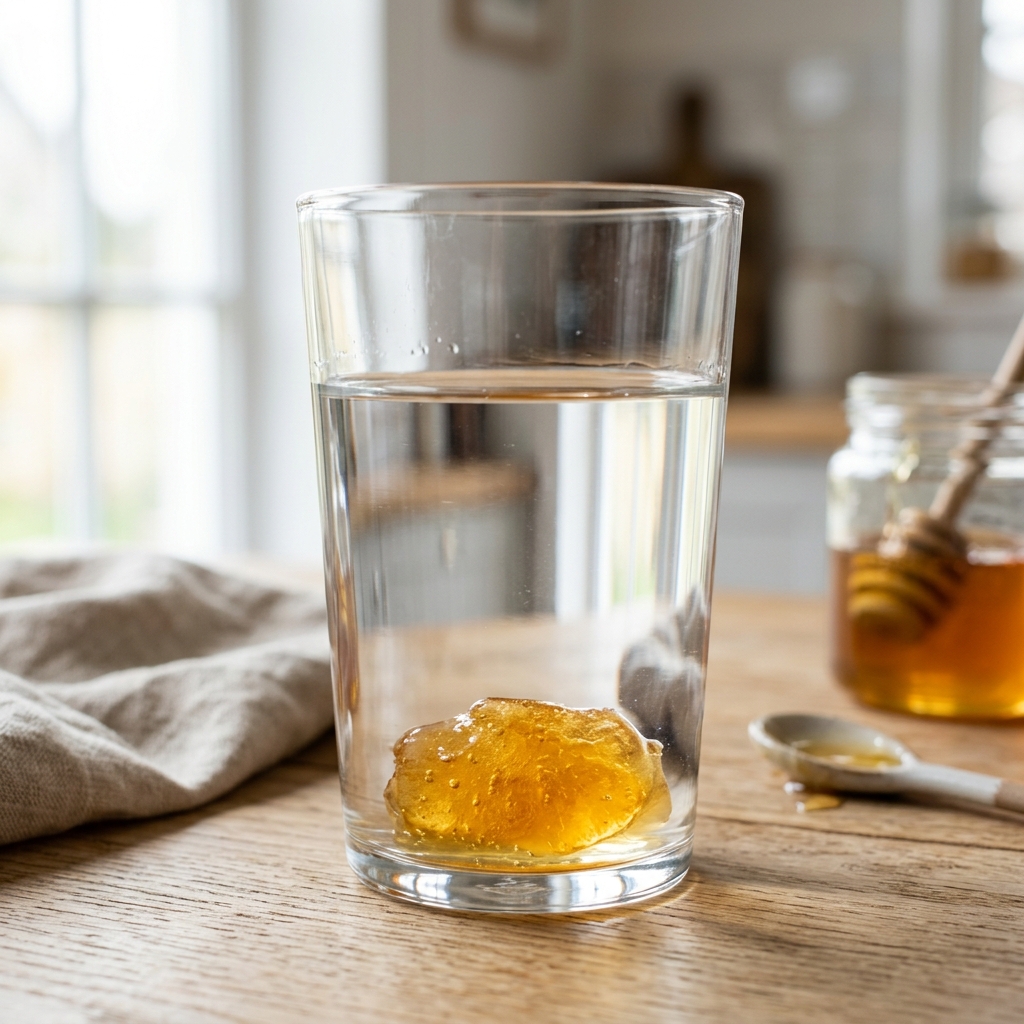
💧 1. The Water Test (The Best Quick Test)
Real honey is dense and doesn't dissolve instantly in water.
- Fill a clean glass with water.
- Add one teaspoon of honey to the glass.
- Observe the result:
- Fake Honey: Will begin to dissolve immediately and mix with the water.
- Pure Honey: Will sink directly to the bottom of the glass in a solid lump, remaining intact until you stir it.
🔥 2. The Thumb Test
Pure honey is highly viscous and holds its shape.
- Put a small drop of honey on your thumb.
- Watch if it spills or runs off like water.
- Observe the result:
- Fake Honey: Is runny, watery, and will quickly drop off your finger.
- Pure Honey: Will stay intact on your thumb without spreading or dripping.
🪵 3. The Flame Test
Pure honey is flammable because it has a low water content (under 18%).
- Take a dry matchstick and dip the tip into the honey.
- Strike the matchstick against the matchbox to light it.
- Observe the result:
- Fake Honey: If the honey contains added water or syrup, the matchstick will not light because of the dampness.
- Pure Honey: Will ignite easily and the honey on the tip will burn away cleanly.
🧻 4. The Blotting Paper Test
Real honey does not contain added water, so it won't soak through paper.
- Place a drop of honey on a piece of blotting paper or a paper napkin.
- Wait for a few minutes.
- Observe the result:
- Fake Honey: Will leave a wet, watery ring around the drop and quickly absorb into the paper.
- Pure Honey: Will remain on top of the paper, not absorbing or leaving any wet marks.
🧪 5. The Vinegar Test
This test detects chemical foaming agents often used to preserve diluted honey.
- Mix a tablespoon of honey with a few drops of water in a small glass.
- Add 2 to 3 drops of vinegar to the solution.
- Observe the result:
- Fake Honey: If the solution starts foaming or producing bubbles, it has been adulterated.
- Pure Honey: Will not react or foam at all.
🏺 The Ultimate Guarantee: Buy Raw
The absolute best way to avoid adulteration is to skip commercial supermarket brands altogether and buy directly from ethical beekeepers.
At Honeyvan, we pack our honey straight from the comb to the jar without pasteurizing or ultra-filtering it. It contains 100% of its natural pollen and enzymes, guaranteeing raw purity in every single drop.
